MagnaRix
Decision Orchestration

MagnaRix Decision Orchestration: from the decision to the work and back.

Decision Orchestration is how an important decision is made, approved, carried into execution, and learned from. MagnaRix is where it runs.
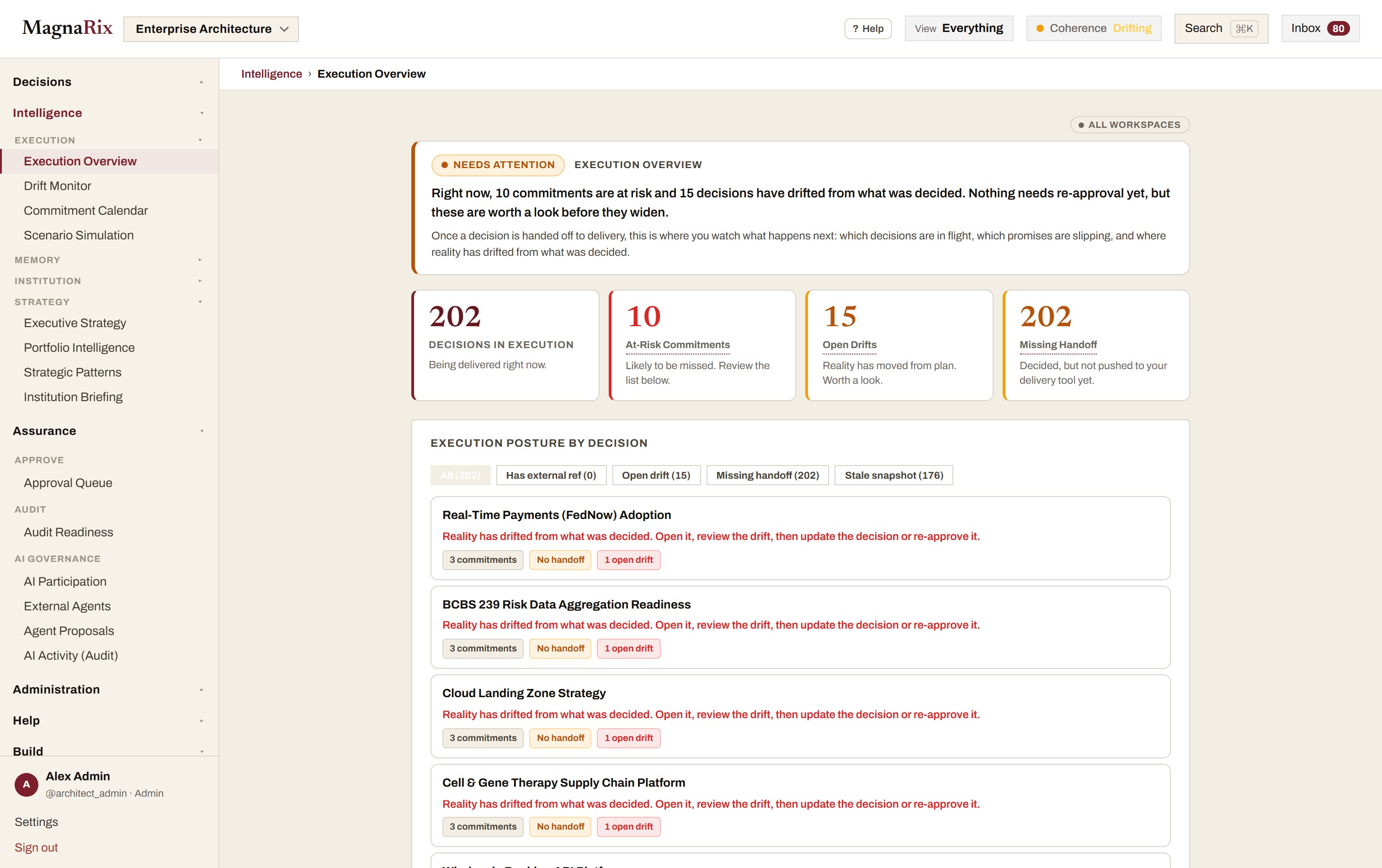
Execution Composer
Decide, compose, execute, learnThe four stages a decision runs through in MagnaRix: from the governed decision to the work it commissions, into the systems your teams deliver in, and back as outcomes.
01Decide

Make the decision in full, with the right sign-off

A decision is made as one complete record: the question, the options, the rationale, the evidence, the assumptions, and who has the authority to approve it. It is governed as it is made, not written up after the fact.

The structure of the decision is shown in the Decision Canvas, the authority that governs it in Governance & Approval, and the person who carries it under uncertainty in Judgment-Bearing.

02Compose

Turn the approved decision into the work it sets in motion

A decision that holds has to become action. Composition lays out the work the decision sets in motion and the commitments it depends on, so the path from approval to execution is deliberate rather than improvised.

The forward-looking promises embedded in a decision are described in Institutional Commitments.

03Execute

Carry it into the systems your teams already run on

The work is created directly in the execution system that owns it. The commitment keeps a direct reference to the work item, so the decision and its execution stay two ends of the same line rather than drifting apart.

The handoff into execution is covered in full in Decision to Execution.

04Learn

Let outcomes inform the decision they came from

Execution rarely matches intent exactly. Outcomes and drift come back to the decision record, so you can see whether the call held, where it was revised, and what the next decision of its kind should start from.

How an institution's positions hold or move over time is covered in Continuity Intelligence, and how a past call becomes a position the institution holds in Institutional Precedent.

Give your most consequential decisions a system you can stand behind.